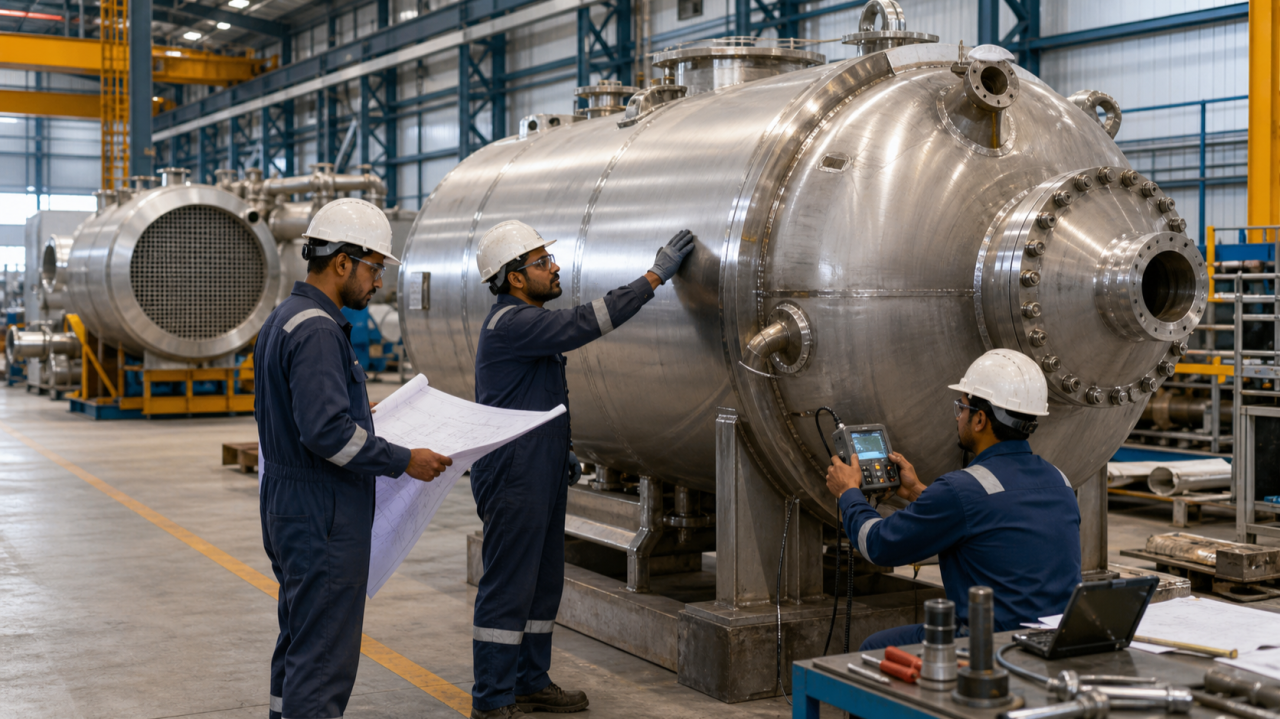
Choosing a pressure vessel manufacturer is not only a price decision. The vessel must safely contain the specified fluid at the required pressure and temperature, while meeting code, inspection, delivery, and lifetime service expectations.
Start with a complete design basis
Before comparing vendors, define the service fluid, operating and design pressure, operating and design temperature, capacity, corrosion allowance, orientation, nozzle schedule, support arrangement, insulation, lining, site conditions, and applicable design code. A clear specification creates comparable quotations and reduces changes during fabrication.
Confirm code and statutory capability
Ask the manufacturer which code edition and statutory requirements will govern the vessel. The team should be able to explain design calculations, drawing approval, inspection stages, nameplate data, and the final documentation package. Where third-party inspection is required, confirm the inspection agency and hold points before placing the order.
Review relevant experience and workshop capacity
Look for completed equipment with similar material, pressure, diameter, wall thickness, welding process, and service. Confirm plate rolling, fit-up, welding, lifting, machining, testing, and handling capacity. A workshop visit can reveal more than a brochure: check material segregation, calibrated instruments, weld control, housekeeping, and traceability practices.
Check calculations, drawings, and materials
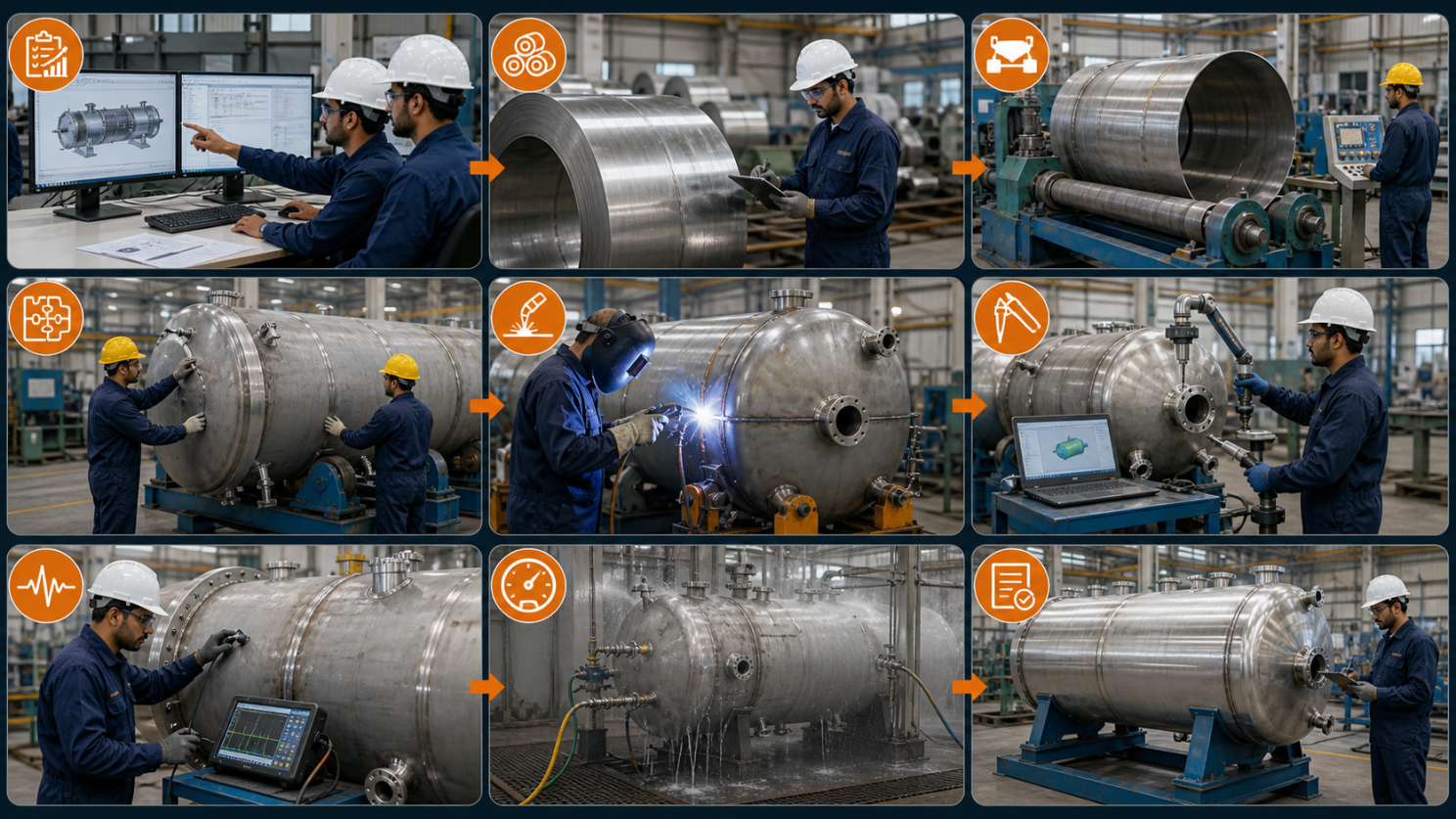
Technical approval should cover shell and head thickness, reinforcement, external loads, supports, lifting lugs, wind or seismic loads when applicable, and nozzle orientation. Material test certificates must match the approved material specification, and identification should remain traceable from receipt through cutting, fit-up, and final assembly.
Verify welding and inspection controls
Request the applicable welding procedure specifications, procedure qualifications, and welder qualifications. The inspection and test plan should state visual inspection, dimensional checks, NDT method and extent, acceptance criteria, pressure testing, surface treatment, and release documentation. Any heat treatment requirement should be identified early and supported by recorded cycles.
Compare the complete commercial scope
Do not compare only the base fabrication price. Check whether quotations include design, drawings, bought-out items, NDT, heat treatment, third-party inspection, testing, painting or passivation, packing, transport, taxes, warranty, and the manufacturing data book. Exclusions and assumptions should be written clearly.
Quick vendor checklist
- Approved design basis and applicable code
- Relevant pressure vessel experience
- Workshop capacity for the required size and material
- Material certification and traceability
- Qualified welding procedures and welders
- Defined NDT, dimensional inspection, and pressure test plan
- Third-party inspection coordination where required
- Complete final dossier, nameplate, and warranty scope
Final thought
A strong pressure vessel order is built on verifiable engineering and manufacturing controls. Choose the vendor who can demonstrate how the vessel will be designed, fabricated, inspected, tested, documented, and supported after delivery.

Evaluating a pressure vessel requirement?
Share your design data, material, code, inspection, and delivery needs with GI Equipments. Start an enquiry.