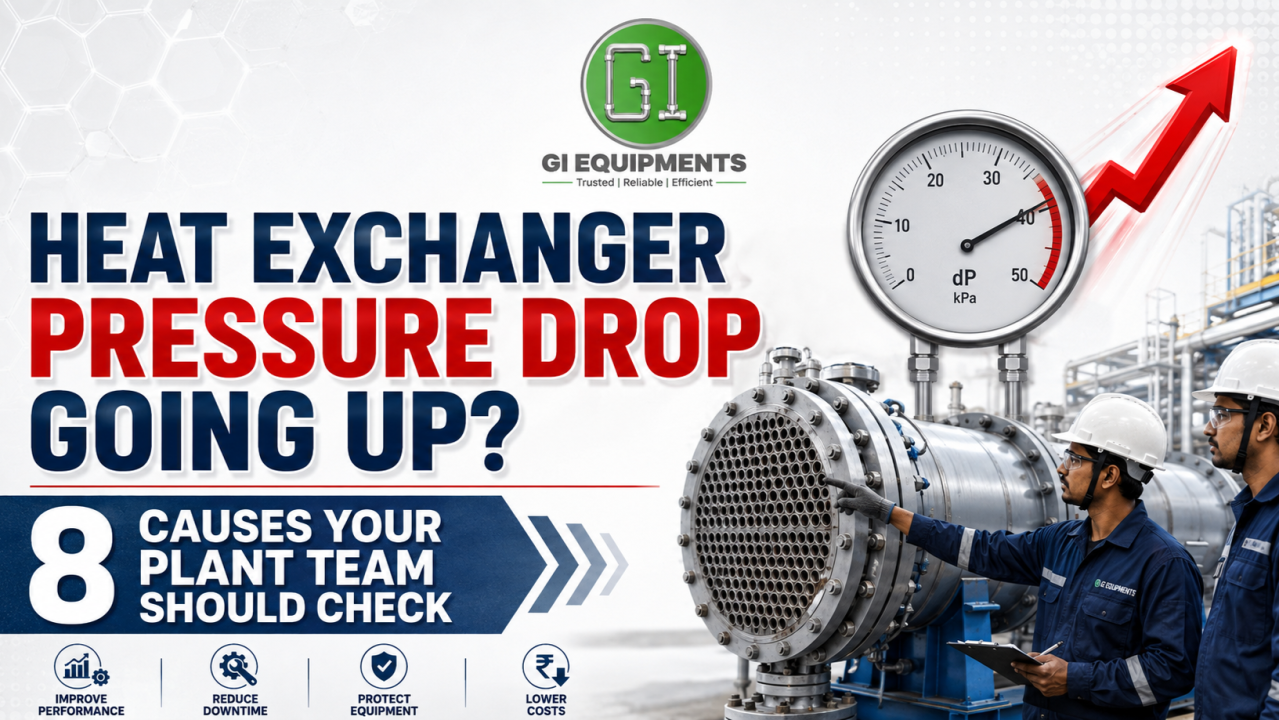
A gradual or sudden rise in heat exchanger pressure drop can reduce flow, increase pump load, and disturb production. Pressure drop is the difference between inlet and outlet pressure, and the useful comparison is against a clean, stable operating baseline.
First confirm the reading
Check that pressure gauges, transmitters, impulse lines, and tapping points are working correctly. Compare local and control-room readings where possible. A blocked impulse line or drifting instrument can imitate a process problem.
1. Flow rate has increased
Pressure drop rises sharply as flow increases. Verify pump speed, valve position, control-loop behaviour, production rate, and any recent piping change. Compare the current pressure drop at the same flow as the original clean condition.
2. Fouling is restricting the passage
Sludge, oil, biofilm, process deposits, and suspended solids reduce the open flow area. Check whether the rise is gradual, whether heat transfer has also fallen, and whether strainers or filters show similar contamination.
3. Mineral scale has formed
Hard-water salts can create a dense layer that increases resistance and reduces heat transfer. Review water chemistry, operating temperature, treatment history, and previous cleaning records before choosing mechanical or chemical cleaning.
4. Debris or foreign material is blocking flow
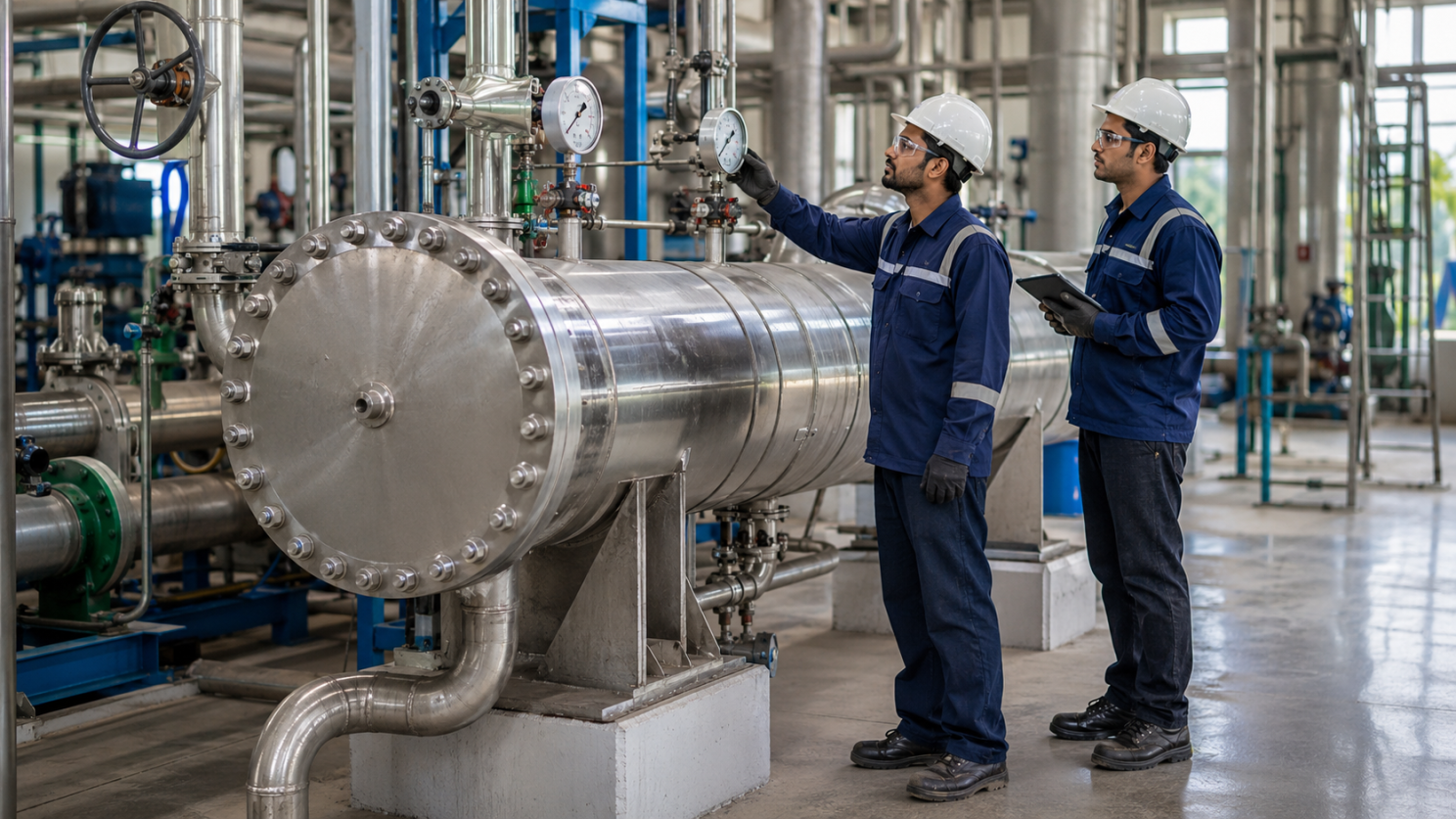
Gasket fragments, corrosion products, packing material, or maintenance debris can cause a sudden restriction. Inspect inlet strainers, channel covers, distributors, and tube entrances, following the plant isolation and safety procedure.
5. The fluid is colder or more viscous
Many liquids become thicker at lower temperature. Review inlet temperature, product grade, concentration, and seasonal conditions. Compare pressure drop only when viscosity and operating state are comparable.
6. Air, gas, or vapour is trapped
Poor venting can reduce effective flow area and produce unstable readings. Check vent locations, startup procedure, high points, flashing risk, and whether pressure drop fluctuates with noise or vibration.
7. Internal damage has changed the flow path
Collapsed tubes, shifted baffles, damaged distributors, deformed plates, or an incorrectly assembled bundle can create abnormal resistance. Internal inspection is appropriate when the pressure rise follows an upset, shutdown, repair, or reassembly.
8. Valves or piping are adding resistance
Confirm that isolation and control valves are fully in the intended position. Check for blocked strainers, fouled downstream piping, incorrect bypass alignment, and temporary blinds that may have remained after maintenance.
A practical troubleshooting order
- Validate pressure instruments and tapping points.
- Record flow, four terminal temperatures, pressures, and pump or fan condition.
- Compare against clean baseline data at the same operating rate.
- Inspect strainers, valves, vents, and accessible channels.
- Review fluid chemistry, viscosity, and cleaning history.
- Plan inspection, cleaning, or repair using evidence from the trend.
Final thought
Do not clean an exchanger only because one pressure reading is high. Confirm the measurement, normalize for flow and fluid condition, then use operating history to decide whether the cause is fouling, blockage, trapped gas, piping resistance, or internal damage.

Need exchanger support?
Share the duty, flow, pressure, temperature, fluid, and maintenance history with GI Equipments. Start an enquiry.